Copyright© 2006 pogue. All Rights Reserved. Reproduction expressly forbidden.
NOTE: COPYING OF THIS ARTICLE IS COPYRIGHT INFRINGEMENT AND CAN RESULT IN LEGAL PENALTIES BY THE AUTHOR OF THIS WORK. DO NOT COPY AND PASTE THIS ARTICLE - ONLY USE THE PERMALINK URL Note: This guide only covers sports supplements related to the aesthetic purposes of bodybuilding including building muscle or weight lifting & power lifting. It does not cover information for endurance athletes or individuals participating in other sports. This also does not cover supplements for general health. The recommendations below are my own personal recommendations and may not be endorsed or agreed with by other members, moderators or staff or other individuals. This guide is written from common knowledge of long term usage of supplements, anecdotal evidence, and clinical research. However, I am not a doctor and this guide is not meant to advise you on medical issues.
This is a compilation of basic knowledge of supplements I have accumulated over the years. I do not claim to know everything, nor do I claim that this document is completely or at all accurate. Please check with a doctor before starting a fitness program or using a dietary supplement. The author of this document and the website(s) it is posted on have no liability directly with the information or recommendations contained within this article. If you have any disagreements with this document, feel free to let me know.Thanks goes out to gimp and my mother for help proofreading. I also want to thank the various other members of the boards I attend and have learned this knowledge from over the years. People like Big Cat, Patrick Arnold, William Llewellyn, Par Deus, Dante, raybravo, the members of the Avant Labs, and Bodybuilding.com boards. All the moderators of the boards, and members who have shared their knowledge with me and have lead me to produce this document which is a basic outline of all the information I've learned. I am giving this away free to the public to share this general knowledge, and help supplement consumers in their never ending quest for information, and to help reach their goals. If I forgot to mention you, let me know. There have been many people to help me throughout the years I may have forgotten over time.
I also want to thank the people who have the courage to post this article. This article is controversial in nature, especially for people in the market of selling supplements. There have been some who have tried to censor and remove this article in the past, and there are many people who would not like you to read this. It's an unfortunate fact that the truth comes at a price. Although I post this article entirely free of charge, it has been a labor of love to try and help people who have been misinformed, lied to, deceived and ripped off. I consider this article to be my positive karma in return for the karma I've received, and I hope you (the reader) can pass it along to me as well.
Also, please keep in mind that I regretfully do not have time to answer specific questions via private message, email or other means for supplements and fitness help. However, I will soon be offering customized diet/training programs for a fee. Otherwise, if you need help, please post your question on this or one of the many other bodybuilding or fitness sites on the internet. Thanks.
Part 1: The BasicsWhat are supplements?Supplements are dietary ingredients that have been manufactured for the purpose of improving an aspect of an individuals life, in this case for sports enhancement. When we talk about sports supplements, we are talking about specific supplements which can purportedly help an athlete perform better in a variety of ways. Bodybuilding supplements are unique in that they are usually designed for the sole purpose of improving body composition, an 'ergogenic' supplement.
Supplements generally consist of natural or synthetic ingredients that are extracts from plants and herbs, amino acids, or vitamins and minerals. These compounds are ingredients that are commonly found in many foods. An individual may choose to take a supplement to increase consumption of one specific ingredient or another for the reason of increasing muscle mass, decreasing body fat, or improving strength or endurance.
Do I need supplements?One of the most common mistakes a beginner makes is assuming that supplements are necessary to achieve your fitness goals. This is not true. Supplements are intended to
supplement (ie: be an addition to) a diet and training routine and improve upon that. If an individuals diet and training are not up to par, then no supplement will help with that, despite what the supplement companies might have you believe. It is also important to note that supplement companies are not restricted by law in what claims they can make for sports enhancement. Generally speaking, a supplement company can make many striking claims about their products with no regards to whether or not it works or if it is even safe.
The majority of muscle and fitness magazines are published essentially just to push supplement products on consumers. A smart consumer should always check to see if there are published studies backing up the claims made by supplement manufacturers, as well as for feedback from users on the supplement. Message boards and other sites on the net are good places to start.
Remember, always put diet, training and rest before supplementation. This goes for spending money as well. Always spend money on the gym bill and food before buying supplements.Part 2: The EssentialsThere are several supplements that work well for most everyone who uses them, are fairly cheap and backed by numerous studies and years of positive user feedback.
1)
Multivitamin. A
multivitamin is a blend of essential vitamins and minerals. They are taken in order to compensate for loss of vitamins and minerals used when exercising, used as growth factors and can add additional vitamins and minerals deficient in your current diet which may be beneficial. Although, most vitamins and minerals should come from your diet, most everyone can benefit from a good multivitamin. They are cheap and can be helpful for athletes who are known to become deficient in certain vitamins and minerals due to exercise and dietary factors. Some studies have also indicated that supplementing with vitamins and minerals can act as a preventative method to prevent ailments for people who are at risk for certain health problems, however this is beyond the scope of this article. Not all studies show multivitamins are beneficial for athletes although most everyone will agree that taking them are beneficial and will not hurt to use them.
Always buy a multivitamin WITHOUT iron. The majority of the population is not deficient in iron and so supplementation with it is not necessary and can even be harmful. However, individuals such as vegetarians and menstruating women need to take iron, as it can be lacking in their diet.
Recommended Multivitamins:
Multivitamins should be taken once or twice daily depending on the recommendations by the manufacturer and desired effects. Never exceed the serving size of a multivitamin. Taking excess vitamins and minerals is not beneficial, and may even be toxic. Avoid "kitchen sink" multivitamins that seem to have every vitamin, mineral, herb and all sorts of other things thrown in together. These vitamins usually come in packs and have mostly too low of a dose of each of the ingredients to be beneficial.
** Check with a doctor if you are taking any type of prescription drugs. Some drugs can have interactions with certain vitamins and cause unwanted side effects. Moreover, vitamin or mineral supplements aren’t a substitute for a balanced, nutritious diet that limits excess calories, saturated fat, trans fat and dietary cholesterol.
Alternatives:
Store brands like Centrum are cheap and work just as well as other brands. Some cereals like Total also contain the RDA of vitamins and minerals in a serving.
2)
Protein Powder.
Protein powders consist of different types of protein such as soy, egg, whey and casein. They are used during the day to either increase consumption of protein or to act as a meal replacement. There are many different kinds of protein powders with different ingredients and flavors. The type of protein you choose will depend on when you plan to use it and if you have any food allergies such as
lactose intolerance. Here is a short overview of the various proteins:
- Whey - whey is a milk derived protein source, which has the highest biological value (BV) of all protein powders on the market. This means that the body can digest it easily and it has a complete amino acid profile. It is the most commonly used protein source. It is fast digesting, so it would be best used post workout and upon waking. A typical dosage is 30-50g of whey protein in milk or water. There are several different forms of whey protein. Whey protein concentrate (WPC) is the cheapest form, but many people have problems digesting it since it is high in lactose. Whey protein isolate (WPI) is a more processed form of whey which is free of lactose and well tolerated by most, but is more expensive. Hydrolyzed whey protein is the most expensive and worst tasting form of whey, but is the fastest digesting. Most people would do best to use either WPI or cross filtered whey.
- Milk - Milk protein comes in the form of milk protein isolate, calcium caseinate or micellar casein. All of these are very slow digesting and are usually used before bed. Milk protein isolate contains both types of casein protein (calcium caseinate and micellar casein), so it is the most common used. Obviously people who have problems with dairy should avoid this.
- Egg - Egg protein usually consists of powdered egg whites, where the yolk has been removed. It is best tolerated by people who have trouble with dairy. It is a slower digesting protein, and has a high biological value. Egg yolk protein also exists, but is hard to find. Egg protein has a good taste, works well in a blend or MRP and is well tolerated by people with allergies.
- Soy - Soy protein is made from soy beans. It is the protein most used by vegetarians. It has a much lower biological value and some concern has been made about the estrogenic isoflavones found in soy. However, soy protein isolate is devoid of most of these estrogenic components. It has a gritty, sandy taste to it, which most don't prefer. It would be best to not use soy as your main protein source, and instead use it in a blend of proteins. It is slow digesting and high in BCAAs. As with egg, soy is well tolerated by people with allergies. Always make sure to purchase soy protein isolate, as it is devoid of most of the negative components of soy.
There are also many
MRPs (meal replacement protein) which is a protein shake, combined with multiple types of protein and other ingredients to make it more like a real meal. For example, many MRPs will contain different types of proteins, combined with fats and carbohydrates. One of the best on the market is
SAN Infusion which contains high quality protein, good fats from flax, and other EFAs, probiotics, glutamine peptides, low GI carbs from ground oats and more. The downside is, of course, the price. Another popular MRP is
Muscle Milk. Although it doesn't have all the same positives of Infusion, it is probably the best tasting shake on the market (I like Cookies and Cream and Root Beer).
You can also make your own MRP with basic ingredients like a regular protein powder, some peanut butter, fruit (strawberries, bananas, etc), olive or flax oil, yogurt, honey and so forth.
Recommended Protein powders:
Individuals who are
lactose intolerant would do well to stay away from products that contain whey protein concentrate, as it seems to have a high amount of lactose and gives people the most problems. Whey protein isolate and the other proteins should be no problem however. For more information on this allergy, please see the article on
lactose intolerance on the Wikipedia.
Looking for a specific blend or type of product? Check the
entire list of protein supplements.
Protein is usually taken in dosages of 1-2g for every pound of bodyweight per day. Most protein should come from whole food sources, however, when protein requirements are high, it is easy to see why drinking some of your protein would be helpful. Again focus on whole food sources for protein and supplement protein drinks when necessary. A
shaker bottle can make a helpful addition if you are on the go. It can be used to mix up your protein powder with fluid, in place of expensive and ineffective protein bars and RTDs (see below).
Alternatives:
Dry milk powder
High amounts of protein from food sources
3)
Creatine.
Creatine is an amino acid metabolite. It is composed of arginine, methionine and glycine. Creatine is supplemented with to increase phosphocreatine in the muscle, which in turn increases
ATP (Adenosine triphosphate). ATP is used by the muscle as energy. Increasing phosphocreatine stores in the body can improve strength and body mass by hydrating muscle cells and other factors. It is not a steroid and it does not have adverse health effects. Creatine is found in most red meat, however, most of it is removed when the meat is cooked.
The only source of creatine used in controlled studies was creatine monohydrate. The other creatines on the market have quite a bit of positive user feedback behind them, but no published studies. If you want to experiment, you may want to try one of these newer cell volumizer products such as
Syntrax Swole v3 or just go with the old standby of plain or
micronized creatine monohydrate.
Some people have found themselves to be "creatine non-responders". They either have a problem absorbing the creatine they are supplementing with or they already have sufficient stores of creatine in skeletal muscles. At this point, creatine has become so cheap there is really no reason not to use it. Some people report upset stomach and other gastrointestinal disturbances with creatine. Some people cannot tolerate it and should avoid it. Others simply need to remember to drink plenty of fluids when supplementing with creatine.
Creatine has been shown to absorb best when it's combined with a high carbohydrate source to increase insulin which helps creatine uptake into the cells.
Recommended Creatine products:
There are many new types of creatine coming onto the market, including
dicreatine/glycocyamine,
Kre-Alkalyn, and
creatine ethyl ester. Although, there have been positive feedback from users generally so far, there is no direct scientific evidence for any of these types of creatine when used for body composition. Basically, all these new creatine products are simply just creatine bound to another agent, amino acid, or compound to attempt to increase absorption or bioavailability. Once creatine is bound to another compound, the amount of total creatine overall decreases. So, 5g of dicreatine might actually be only 3g of creatine total. Feel free to try these creatines if you wish, or stick with the basics. Many people lately are reporting good results with the newer forms of creatine, but take these with a grain of salt. These are all anecdotal so far, and no studies have yet been conducted to prove their worth.
Creatine is generally taken in 5g daily with a high carbohydrate drink or meal. It is most commonly used around the workout window (before or after). Some people "load" creatine by taking a high dosage for a week or so to help it increase into skeletal muscle, however loading is not required. You can avoid spending money on high priced formulas like
Cell Tech by simply mixing a plain creatine powder with Gatorade. Creatine also does not need to be cycled.
Never buy creatine serum, or any kind of creatine suspended in liquid or gel. This has been shown time and time again to be completely worthless since creatine degrades in fluid.Alternatives:
Lots of lean red meat
4)
Essential Fatty Acids (EFAs).
EFAs are made up of fats and oils that are beneficial to overall health and for a variety of ailments. EFAs support many functions in the body including the brain and joint function. In addition, they can reduce inflammation and produce hormones. They can help reduce cholesterol, alleviate depression, and assist with muscle building. Some EFAs such as those found in olive oil and flax oil can be mixed with a protein shake or added to various other food sources to add calories in the form of fats. There are various sources of EFAs such as flax and olive (as mentioned) and also EPA/DHA from fish oil. Some products provide a blend of the omega 3,6 and 9s such as Udos Choice and
The Total EFA. Essential fatty acids have such an extended range of functions in the body that it is beyond the scope of this article to describe them.
Don't buy anything labeled "High Lignan" Flax Oil.
Flax oil contains only about 2% of the lignans found in flax seed. Because lignans are water-soluble, they dissolve very poorly in oil and therefore, when flax oil is pressed, most of the lignans remain in the flax seed cake. 'High lignan' flax oil is 'dirty' flax oil in which the fine seed material suspended in flax oil, when it is pressed, has not been filtered or allowed to settle out, but is permitted to settle to the bottom of the bottle. There, the seed material, which contains lignans, compacts.
The buyer gets less oil, pays more, and does not obtain the lignans unless he scrapes, with a thin pointed object, the seed material containing the lignans that is stuck to the bottom of the bottle. Since the oil is packaged in black plastic, the buyer is usually not aware that this material has adhered to the bottom and is not alerted to this fact either. A second problem with leaving seed material in the flax oil is that this material usually has a high bacterial count, and can contaminate the oil. That is why oils should be filtered before being bottled.
Full ArticleYou can also grind up your own flax seeds and mix them in with your protein shake. This gives you the dual benefit of adding fiber to your diet, while getting your EFAs. But be careful not to take too much or you will experience a laxative effect.
Recommended EFAs products:
You may also want to try a specialty product, such as
SesaThin by Avant Labs which is a product made from sesame oil extract. It has been shown to have very positive benefits on overall health, as well as possibly helping with fat loss. When sesame oil is taken with
GLA, it can help increase its potential to act as an anti-inflammatory, similar to NSAIDs.
Alternatives: Nuts, seeds, olive oil, fish (anything else?)
Part 3: Optional StuffThis category includes optional supplements which may or may not help you build muscle or loss fat directly, but have benefits on their own related to bodybuilding. They may help, but are not by any means necessary or recommended for purchase unless you have additional funds at your disposal or are interested in their benefits.
1)
ZMA.
ZMA is a combination of zinc, magnesium and vitamin B6. One study done by the manufacturer showed the individuals who took it had increased testosterone levels as well as strength and lean mass. However, this study has not been duplicated and many people report that they have not had any benefits from taking ZMA related to bodybuilding. One study has refuted the original claims of ZMA. The most common benefit reported from using ZMA is a much deeper and more restful sleep. This correlates with the theory that ZMA can increasae testosterone, GH, IGF-1 and other hormone levels. Obviously getting a better quality sleep can help anyone and so ZMA falls into the category of optional. It may or may not have any direct impact on weight training though. ZMA is taken in a dosage of 30mg of chelated zinc, 450mg of chelated magnesium and 10.5mg of B6 before bed away from calcium. It's a cheap formula and wouldn't hurt to take it if you felt you needed it or wanted to try it. Only a blood test can deteremine your testosterone levels and if you are deficient in minerals such as zinc and magnesium. Never take excessive amounts of zinc as they can cause deficiencies in copper and other problems in the body.
2)
Alpha Lipoic Acid (ALA).
Alpha Lipoic Acid is classified in the body as an antioxidant. It recycles Vitamin C and E and helps to reduce and remove free radicals which cause cellular damage. There has also been some studies showing that ALA has potential benefits on glucose tolerance and reducing blood sugar levels, somewhat mimicking insulin. If this were the case, it could have the effect of increasing lean muscle and decreasing body fat over time, acting as a nutrient partioning agent. Whether or not this is the case is up for debate, but it is still a potent antioxidant. Another form or ALA, known as
R-ALA, has recently become a fad supplement. It is theorized that the R isomer of ALA (regular ALA is composed of 50/50 mix of R and S isomers) is stronger than the S form. Using ALA supplements would be optional. ALA is generally used in dosages of 300mg 3-4 times a day with meals. With R-ALA you can take less, but it is more expensive. A new form of R-ALA, known as K-RALA has shown up on the scene. It is R-ALA bound to potassium which claims to have a longer half life in the body. However, there is no scientific evidence to back this up. Time released ALA formulas are also available.
3)
Antioxidants.
Antioxidants such as
NAC,
ALA (as mentioned above),
green tea extract and other compounds have the ability to reduce cellular damage from free radicals. Most all antioxidants have health benefits that go beyond simply weight lifting and bodybuilding. However, since heavy lifting can cause cellular damage, some people supplement with various antioxidants to reduce recovery time and hopefully minimize tissue damage. Few studies have demonstrated that these supplements have a direct benefit on body composition (with the exception of green tea extract for obese patients). Antioxidants are healthy and would benefit most who took them. However, they are not required and again fall under the optional category. There are numerous antioxidants available, too many to list, so it is best to read up on them individually and decide which ones would benefit you most. Antioxidants are taken in various dosages depending on the desired effects and which is being used. Some basic antioxidants, such as
Vitamin C are already found in most multivitamins.
Recommended Product:
Syntrax Radox4)
Digestive Enzymes.
Digestive enzymes are usually made up of various plant and animal enzymes, some of which you already have in your digestive tract. They can assist with digesting food and are helpful for those who have gastrointestinal problems. Probiotics also fall under this category. Probiotics are active live cultures, such as those found in yogurt, which help recolonize your stomach and intestine with healthy bacteria (such as acidophilus). If you experience gas or upset stomach after consuming meals, especially protein shakes, enzyme supplements can be very helpful. They can also possibly help with the uptake of nutrients into the body.
Recommended Product:
NOW Super Enzymes5)
Joint Stuff.
Joint supplements such as
glucosamine,
chondroitin,
MSM and
SAMe can be helpful in alleviating joint pain associated with osteoarthritis and weight training. These supplements aren't necessary if you aren't experiencing joint problems, but if you are they can help very much. They can also act as a preventative measure by helping to build up the joints and keep them strong. You will want to take 1g of each ingredient mentioned above (except SAMe) daily.
Recommended Product:
TKE Joint BoostPart 4: Not Recommended/Not Enough Research Supporting it/Poor Feedback/Too ExpensiveThis is a broad category, but it intended to fit a lot of supplements. Some of the supplements mentioned below either flat out do not work at all, are too expensive and not required for beginners or the feedback and research on the supplement is poor. Hopefully this will clear up most misconceptions about various supplements you read about which you do not need to be using and save you some money. This section might offend some people who have been using these supplements under misguided pretense. Some of these supplements have uses outside of sports and weight training.
Protein Bars/Ready to Drink Protein (RTDs) - Not RecommendedYou see protein bars everywhere nowadays. From the grocery store to the convience store, they are everywhere, even Snickers has one. The problem with most of these protein bars is they are low in quality protein and high in carbs and sugars. They generally use glycerine, gelatine and collagen for the dual job of falsely increasing the amount of protein on the label and holding the bar together. Avoid premade bars, they are too expensive and are inferior in quality. RTDs have probably denatured by being stored in various conditions for so long, and are usually of the same quality as protein bars. Instead, supplement with a protein powder with your own added ingredients. Although under some circumstances, where no other source of food or protein is available, a protein bar or RTD protein drink can be acceptable. Just do not consume them frequently, or rely on them as your main source of nutrients.
Weight Gainers - Not RecommendedWeight gainers generally consist of very cheap, low quality whey protein concentrate and high glycemic carbohydrates such as dextrose and maltodextrin in an attempt to add calories. These products are not recommended, as it is not a good idea to have blood sugar elevated all the time from consuming simple sugars. It would be much better to make your own weight gainer out of a simple protein powder, blended with various fruits, essential fatty acid oils (such as olive or flax) and some ground oats. These will add good, healthy calories without a compromising high insulin spike.
Tribulus - Not Enough ResearchTribulus is an herb which has been purported to increase testosterone in males through LH signalling. Although there is no published data to support this, supplement companies continue to market it to aid bodybuilding and to enhance the libido. One study shows that this herb has had no effect on body composition and strength. There has also been the claim that the herb was not a standardized extract and must be high in saponins. Whether or not this is true has yet to be seen, but there is no published data to support it. Most information on tribulus comes from the people selling it and some individuals who see positive effects from it. Some people swear by this product while others see little value. I would consider placing this in the 'optional' category, but there is simply not enough research on it. Whether or not you use it is up to you, but it is not recommended or necessary for individuals just beginning bodybuilding.
Tribulus Terrestris Extract: Supplement Fact or Fiction by Bryan HaycockTongkat Ali/Longjack (Eurycoma longifolia) - Not Enough ResearchTongkat falls under the same category as tribulus, as being a purported herbal testosterone booster. There is absolutely no evidence to verify this, and most of the claims come from Malaysian studies performed by the manufacturer indicating that it is possibly an aphrodisiac in animals. This is not necessary to use.
Ipriflavone/Methoxy - Not Enough Research/Poor FeedbackMethoxy, or 5-methyl-7-methoxy-isoflavone is a derivative of ipriflavone, which comes from the estrogenic soy isoflavone, daizden. The only information that methoxy can increase body composition is from the patent filed by its inventor. There has been published data on ipriflavone which shows it can increase calcium stores in women with osteoporosis, but beyond that there is no information on it. Methoxy was initially touted as a miracle anabolic. However, most supplement manufacturers used doses too low to be effective for any purpose. Whether or not this actually builds muscle is obvious to most (it doesn't). Most everyone has come to the conclusion that this stuff is completely worthless and does nothing for body composition purposes. For those who still wish to try it, it can be purchased from some manufactures in a bulk powder form. You would need 1-2g daily to try and see beneficial effects. This is not recommended or necessary for anyone, beginners included.
Howz it Work?: Ipriflavone/Methoxyflavone by Bryan HaycockEcdysterone - Not Enough Research/Poor FeedbackEcdysterone is a plant/insect steroid. It is often packaged with methoxy with similar reported anabolic effects. There has been some research showing this has positive effects in animals, but most of these studies were done by Soviet scientists under the strict authority of a communist regime. Since these studies have not been carried out recently, it is hard to determine whether or not ecdysterone is beneficial or not. Again, for those wanting to use it, it can be purchased in bulk powder form and supplemented in 1-2g daily. This is not recommended or necessary for anyone, beginners included and is commonly known to be a scam supplement.
Prohormones & Steroids (andro, 1AD, DHEA, Superdrol, etc) - Not Recommended For BeginnersProhormones are synthetic precursors to steroids. They are used by advanced bodybuilders to increase muscle mass and lose fat. It is not a matter that these don't work, but these are not general supplements which are used on a regular basis and will usually not benefit beginners. It is important to take into account how to use prohormones/steroids and how they work, as well as having a good base built up and general knowledge of nutrition and training. Most beginners can make exceptional gains when they just start weight training, even better than those using prohormones or steroids. When you are first starting out, prohormones/steroids are definintely not recommended. Since prohormones are now banned, this is sort of a non-issue, however there has been a resurgance in new designer steroids and many people are using them without any knowledge of their effects or how they work. This can be very dangerous and I highly recommend individuals do not use them without extensive research.
See also the
Prohormone FAQ and the
Steroids FAQ by Big CatFat burners (ephedrine, caffeine, etc) - Not Recommended for BeginnersI felt I had to include fat burners under here. There are a lot of "fat burners" on the market, some of which work, most of which don't. These include things like caffeine, ephedrine, yohimbine and others. The simple truth is that, as with prohormones, it is best if you start out with learning about the basics of nutrition and training before you begin to use fat burners. Most beginners can do well losing weight with just modifications of diet and do not need fat burners. However, if you feel you need to use one, a stack of caffeine and ephedrine work very well for those who don't have any problem with stimulants.
Yohimbine is not recommended for beginners. This goes for topical (transdermal) products as well.
Individual Amino Acids - Not Enough Research/Too Expensive/Not RecommendedIndividual amino acids or amino acid tablets have always been sold to bodybuilders. Most of this has to do with the fact that high-quality protein powders weren't available till the last few decades, and so in previous decades, bodybuilders had to supplement with amino acids to try and increase protein synthesis. Lately, a resurgence in this has been seen with supplement companies pushing a large array of amino acids and amino acid derivatives. The truth is most of these are not beneficial in any way to body composition. If you are using whole food and protein sources in 5-6 meals daily, you do not need to supplement with additional amino acids. Here is an overview of some of the most common amino acid products on the market.
- Arginine/AKG/Arginine Malate - Arginine is commonly purported to increase growth hormone and nitric oxide levels and is touted as an "NO2" increasing supplement. Recent studies have shown these have no effect on muscle mass, recovery and very little effect on strength. Most individuals report an increased "pump" during their workout.
- Citrulline/Citrulline Malate - Citrulline is an amino acid found in watermelon. It has recently been touted as a supplement to assist with aerobic excercise by reducing ammonia buildup. There is no evidence supporting the claims about increasing protein synthesis or body composition. This is extremely expensive and not necessary for bodybuilding purposes. Endurance athletes might see a benefit.
- BCAAs - BCAAs or branch chain amino acids are the building blocks of muscle. Some research has shown supplementing with them will assist with performance of endurance sports. If you are using plenty of whole food and a protein powder, supplementing with BCAAs is not necessary. They are also extremely expensive, and a large dose is required.
- HMB - HMB is a derivative of leucine. There are a few studies that show it has benefits, but most show it has none. It is also extremely expensive and requires quite a high dosage. This is also not necessary.
- Glutamine - Glutamine has been shown in numerous studies to not only be completely ineffective for enhancing body composition, but it is also completely utilized by the stomach and never reaches the bloodstream. This is also very expensive and most will not see any benefits. Do not spend money on glutamine.
- OKG - a derivative of ornithine. This is an older supplement which is not extensively used, but also falls under the category of not being beneficial to strength training athletes.
- GABA - GABA itself does not cross the blood brain barrier, and is ineffective for the uses of fat loss, GH increase, or other claims. Although it might help you sleep, there are still better supplements to use for that purpose.
- L-Carnitine - Carnitine has been touted as having fat loss benefits. This may be true, but people who are expecting this to fall under the category of a fat burner will be dissappointed. Carnitine may indeed be a beneficial amino acid to supplement with for body composition purposes, but there is not enough data at this point to determine that. However, L-carnitine and Acetyl-l-carnitine have benefits on their own, but are not necessary for individuals beginning to weight train unless they are looking for its specific benefits (such as increasing acetylcholine, increasing trigylceride release, etc). Although I would say that Carnitine might be one of the only individual amino acids that could be supplemented with on its own for health benefit, it will probably have very little to no effect on body composition.
That is not to say that these amino acids do not have benefits on their own, or outside of building muscle. But realistically, they are too expensive and have very little real world and medical feedback proving their case. As mentioned, you should be getting most of your aminos already from whole protein food sources and protein powder. Spend your money on the essentials, and not amino acid formulas.
Dessicated Liver (liver tabs) - Not RecommendedLiver tabs are sort of the old school bodybuilding supplement. They are high in amino acids and B vitamins. At a time when protein powders and multivitamins were scarce, liver tabs were a godsend. But, nowadays if you are using a protein source such as whey and a multivitamin they aren't necessary. They are also incredibly large tablets and you have to take 4 with every meal usually. Users also complain of some gastrointestinal distress from them. If you wish to use them, you can, but most people see no added benefit from them.
Colostrum - Not Enough Research/Too ExpensiveColostrum is made by cows after they give birth to calves, in order to feed their young some important nutrients to get them started out in life. It has factors which increase the immune system and support the gut, as well as some other good stuff like GH and IGF-1. The problem is that studies using colostrum used extremely high dosages and had little results. The application it has to a bodybuilder is minimal and is, unfortunately, extremely expensive and would require large dosages in order to be useful. Whey protein contains some of these growth factors and would probably work much better overall, in terms of gains. It would be best to avoid this, unless you can afford to supplement with 25g daily or more.
SupplementWatch: ColostrumGrowth Hormone Supplements - Not RecommendedGrowth hormone supplements generally contain a blend of amino acids or various other ingredients, sometimes a homeopathic blend, sometimes the ingredients aren't even listed. They come in packets, powders, pills and sublingual sprays. All of these are basically junk for one reason or another. Most of these are ineffective at increasing growth hormone, first of all, and secondly growth hormone is not beneficial to increasing muscle. True growth hormone comes in an injectable form and is very expensive. It is rarely used in this form by amateur or non-competitive athletes. Avoid all supplements which claim to increase growth hormone levels.
QuackWatch: Growth Hormone ScamsStraight Dope: Can human growth hormone slow aging?FTC: “HGH” Pills and Sprays: Human Growth Hype?Homeopathic Supplements - Not RecommendedHomeopathic supplements usually have listed under the ingredients various unknown substances with a number and an "X" after it. Usually something along the lines of
Realbigious Scamius 12X. All homeopathic products are fraudulant. The idea behind homeopathic medicine is to use little to no ingredients and make outrageous claims of any kind. It is best explained at the link below. Avoid all homeopathic products.
Homeopathy: The Ultimate FakeHomeoWatch: Your Skeptical Guide to Homeopathic History, Theories, and Current PracticesHomeopathy Article from the WikipediaHomeopathy Article from the Rotten LibraryChromium/Vanadyl - Not RecommendedChromium and Vanadyl are trace minerals. In recent years they have been touted as super supplements which increase insulin sensitivity, muscle mass and fat loss. Although they may help increase insulin sensitivity, the other claims are not true. You should be getting chromium and vanadyl in your multivitamin already, as well as in your food. Supplementing beyond 200mcg of chromium or 10mcg of vanadyl daily is not recommended or necessary unless you are diabetic, in which case you should consult a doctor before taking these.
SupplementWatch: ChromiumSupplementWatch: VanadiumCLA - Not Enough Research/Too ExpensiveA recent study showed CLA did not have any effects on body composition, including fat reduction. With that in mind, including the fact that it is an incredibly expensive supplement to get the necessary amounts that would be required to cause significant effects on body composition, it is not recommended. You can get CLA from eating grass fed and free range animals. Supplementation is not recommended.
Myostatin/CSP3 - Not RecommendedThere was a lot of hype when the "Myostatin" gene was first discovered. Pictures of rats with huge exploded muscles were posted in magazines and online and supplement companies were quick to take advantage of this discovery. They came across a study showing that a type of seaweed that supposedly bound itself to the myostatin gene in vitro. It never proved itself worthy in real life, and has completely been shown to be a completely bunk and worthless supplement. Most companies who made this have stopped selling it.
Coral Calcium - Potentially DangerousAlthough this doesn't fall under the category of athletic supplements, I felt it should be listed here simply due to the fact that it is potentially dangerous and the claims made by the manufacturers are extremely dubious. FDA tests have shown that most coral calcium contains lead, and therefore would be very dangerous to take.
Coral Calcium WarningBe Wary of Coral Calcium and Robert BarefootCarb/Fat/Calorie Blockers - Not RecommendedCarb and Starch blockers generally consist of white kidney bean extract, while fat blockers consist of chitosan. Neither of these have any evidence that they effectively block the absorption of fats or carbohydrates from the intestinal tract. It is recommended you avoid these completely. Using plenty of fiber daily will have a very similar effect on fat absorption and overall health.
Quackwatch: Be Wary of "Calorie-Blockers"
Part 5: The Complete PictureThere are many other supplements out there, too many to be listed here. Some of which can help you reach your fitness goals, and some of which are completely bunk and are a waste of money. However, regardless of what supplement(s) you take, you will still need to have proper and adequate diet and nutrition in order to meet those goals. An ideal bodybuilder and weight gainer diet will consist of six meals a day high in protein with a meal upon waking and a slow digesting meal before bed to ensure an anabolic state throughout the day. There are many different opinions on dieting and you may need to experiment as to which works best for you. Some people advocate high carbs and low fat, while others say low carbs and higher fat. Your post workout meal is also extremely important as this is the time when your body needs to be feed with a quick digesting protein source with a sufficient amount of carbs. It's also very important to stay hydrated throughout the day by drinking plenty of fluids, especially water.
As with diet, there are many training routines people advocate, and not every routine works for everybody. Some people grow best on a higher volume and lower weight routine, while others do well with low volume (less reps) and heavier weights to failure. You should be training at least 3 times a week with weights concentrating on the core workouts for chest, arms, back and legs. Cardiovascular exercise is also very healthy and can help maintain a low bodyfat percentage as well as having many other benefits. Progressive weight training to increase muscle mass and strength are the keys to successful bodybuilding.
Finally, you must be able to get plenty of rest and abstain from excessive alcohol consumption "partying". Getting enough sleep at night is another key factor in recovery, health and growth. Excessive alcohol usage and drug abuse will only limit your gains and cause stress and trauma on your body. Obviously smoking is also counter productive.
A proper diet, training routine, and plenty of rest are the 3 most important things that will make a person successful at improving their body image, health and strength. Without them - no supplement will help.
Part 6: FAQ1) My friend takes Supplement XYZ that you have as not recommended and it works great for him. What's the deal?There are different quality supplements that can have varying amounts or quality of ingredients (even if it says so on the label). Some supplements may work for one person, due to the quality of the compound in the supplement, while it may not work for another because they used a different brand, or didn't use a similar dosage. That person could also simply be experiencing a placebo effect. Also, there are some unscrupulous individuals who are either paid by the supplement company or given free supplements for a positive review, either online or in retail outlets. Do your own research and make up your own mind.
2) I heard on the news/from a friend that such and such supplement (creatine, multivitamin, protein powder, etc) is dangerous. Is this true?The main focus of the media is to attempt to sensationalize stories to make certain things more interesting for people to watch, so as to increase ratings. When people watch the media with the idea that they only report the facts and then go and repeat them to other people, it causes a lot of headache and grief for people who have taken time and energy to prove otherwise. The truth is that any supplements might be dangerous if used improperly, or if the individual taking them has an underlying medical condition or is otherwise neglegent in using them. As comedian Bill Hicks said "You never see a positive drug story on TV." The same goes for nutritional supplements. Having said that, supplements are not regulated by any government body so it is possible that a company could produce a dangerous supplement without anyones knowledge until people start having health problems. Again, do your research before you start taking any product.
10 Nutritional Myths that Just Won't DieThe Safety of Creatine by Layne NortonIf you have any concerns about the safety of dietary supplements, it would be in your best interest to discuss them with a doctor, such as a doctor in sports nutrition. This is especially important if you have any health conditions or take prescription drugs.
3) There is a great new form of Methyl-Creatine-Arginine-Glutamine-Malate-Ester that works even better than before. You should add it to your list!Supplement companies work to bring out new and better forms of older supplements all the time. Most of the time, these have no scientific proof that they work any better or are more bioavailable than their previous versions (if the older versions did anything at all). There are also a lot of products that look good on paper and don't pane out in real life. Don't be a guinea pig with your body and your hard earned money. Let other people try it first and see if it withstands the test of time. Also, just because other supplement companies are bringing it out, doesn't mean it works, just that people are buying it.
4) Supplement Company ABC says that their supplement is 900% more anabolic than steroids and causes 15lbs of muscle gain/fat loss in 4 weeks. Is this really true? How can they say this?No, it is not true. Supplement companies can basically get away with saying anything they want because of the wording of the DHSEA. Only rarely will the FDA or FTC pursue supplement companies that make fraudulent claims. Be extremely skeptical of supplement companies that make these kind of outrageous claims.
Part 7: What to do if you've been ripped off by a Supplement CompanyIf you feel you've been ripped off by a supplement company, or bought a worthless or crappy supplement, then you should take action to recover your money and let the vendor know your feelings. The main problem with supplements is not necessarily their ingredients, but their fraudulent, false and misleading advertising. As I've mentioned above, some supplements do work, but it's either that there is not enough of the active ingredient in them to be effective, or they promise you the sun, moon and the stars if you take their supplement, which is either impossible, or not possible without a very effective diet and training routine.
A short word about laissez fair free market vs. freedom in advertisingBecause the dietary supplement industry is, at current, a fairly unregulated industry, it has caused some general complaints and problems from people that many supplements do not work. There have been industry efforts, by the FDA, NNFA, USFA, and other organizations to try and give the supplement industry some boundaries and guidelines in manufacturing good quality supplements. For example, some supplements have the GMP seal, which means they are manufactured under strict guidelines, but their individual ingredients are not verified. All other companies are left to their own accord to provide you with what they say they are providing you, and there is an essense of trust with the consumer that the company is making what they say they are making, and what is on the label is really in the product. Some people have gone so far as demanding that supplement companies produce a CoA (certificate of analysis) showing the purity of whats in the supplement, to say that they are genuine and pure. However, there is no real mandate requiring it, so it is simply again, a matter of consumer trust. I propose that the FDA enforce their current legislation, the
DSHEA so as to allow consumer freedom, and mandate that supplement companies are regulated to prove that their ingredients are pure, and that they are forced to have some truth in advertising. On the other hand, if strict legislation is enforced, this will stifle the smaller companies and cause less newer and possibly better supplements to come out, since companies will be forced to prove that these new compounds do what they claim. Currently, I believe, that supplement companies do not have enough enforcement, and it has allowed adulterated supplements, falsely advertised supplements, and sometimes even potentially harmful and dangerous supplements. I recommend that as a consumer, you always research what you are putting in your body first and never trust a company to disclose to you what the various ingredients do, even if legislation is enacted to mandate the fact. I think it is in the best interest of the consumers to put a safe ingredient in their bodies of their choice, and for the vendors to be able to come out with new and better ingredients for consumers.
Supplements as Motivation Factors
Many people use supplements as a method to motivate themselves in the gym to train harder and workout more productively.
This is why you see supplement companies coming out with new supplements each month. Having the latest and greatest supplement that will burn the most fat and build the most muscle based on the latest research can be an important mental method used by athletes to try and do their best and try to work towards the best results. Many times when a new supplement comes out you will hear people raving about how great it works. Sometimes these are a paid undercover spokesperson for the supplement company that makes the product, but sometimes its an actual user who has had good results. But, is this person getting good results because the supplement is so effective? Or is it because they took the idea that the supplement worked so well and it helped motivate them to focus harder on their diet and training and really the supplement had little or nothing to do with the improvement. Many times new supplements that come out are just modifications of older supplements, such as amino acids with an ester attached, or an herb with a higher potency extract, or even some new ingredient someone found in an old study. Keep in mind when buying supplements that most have never been studied on humans at all, or not very extensively. Some are completely theoretical. Many people love to be guinea pigs and rush to try out the latest thing and by next month someone will have come out with something new and better or modified last months supplement slightly that claims to work better. So, if you want to save money and not risk your health on questionable ingredients then stick with the basics. Besides, if it works as well as they claim it does, then it will be around in six months and have numerous copy cat formulas. Remember there's no essential supplements and companies can claim anything they want. Don't fall in with the crowd to be a beta tester for a supplement - instead work on improving your diet and training and you will usually have much more success than with any new supplement.
How to get your money back or complain about a supplementStep 1: Contact the vendor you purchased the supplement from and demand a refund. I believe that most companies have a genuine interest in producing good, quality products, that have the intention of doing what is advertised. Most companies are also very good about refunding merchandise. Simply explain to them that the supplement did not work for you, you did not like it, had an adverse reaction to it or whatever and ask for your money back. If they refuse, then contact the manufacturer of the supplement and do the same. Also, let both the manager at the location you purchased the supplement from, as well as an individual from the manufacturer that you feel that the supplement is ineffective. Almost 99% of the time, this will resolve your problem, as most companies offer refunds if you aren't satisifed with the product. Keep in mind, that not all supplements work in all people, and it is also a responsibility of the consumer to use the product in a safe manner, as directed on the label, and in accordance with proper diet and excercise.
Step 2: If both the place you purchased it from and the manufacturer refuse to give you your money back, then you have two options. You can either give up on your lost money, throw the supplement away and move on, or you can report it to various agencies to try and resolve your complaint. Just keep in mind not to lose your patience or temper and go off on a tangent complaining to everyone that you are having a problem with a supplement or a supplement company. Online message boards like bodybuilding.com's are a good place to share your experience with your supplement, and it's vendor - positive or negative. Below are some links to report problems with the purchasing process and adverse effects on supplements.
- Report adverse effects to the FDA or through MedWatch or call 1-800-FDA-1088. This will register into a database with the FDA of problems with ingredients and if you have had an adverse effect. Please don't abuse this if you have a vendette with a supplement company, and only if you truely are having a bad effect.
- File a RipOffReport Ripoffreport.com creates a page that allows consumers to report on their problems with various companies, and allows companies to respond in turn. This is also a repository for you to search before purchasing from a company or individual to see if previous reports have been filed.
- File A Report with the Better Business Bureau The BBB can help mediate issues with companies, and let them know you are serious about your complaint. Although there have been questions with regards to the BBB's disclosure's policy, it is just another step in the chain that consumer's have to resolve their complaints.
- File a Complaint with the FTC The FTC enforces truth in advertising, and keeps records of consumer complaints. Although one individual filing a report doesn't do much, if many do, the FTC will occasionally take action against consumer fraud.
- Contact the NNFA The NNFA is the National Nutritional Foods Association. It certifies GMP supplements, and is a supplement industry group.
- Send a comment to the FDA As above, this is a different route to make your opinions known to the FDA.
- Report Fraud to QuackWatch/The National Council Against Health Fraud Dr. Stephen Barrett, M.D. runs QuackWatch, a non-profit organization dedicated to protecting consumers against fraudulent medical practicies, supplements, and general quackery.
- Report False or Misleading Product Labels StopLabelingLies.com runs a reporting service for allowing consumers to report false/misleading product labels
- Report to the National Fraud Information Center The Nat'l Fraud Center handles complaints of all types
- National Association of Attorneys Generals - The NAAG has links to report complaints to your states AG
- The Consumer Action Handbook has tips and contact information to state/local/federal agencies for consumer affairs. You can also order a free copy of the booklet in print.
- How To Resolve your complaints and get back your money - my personal how-to guide on this very subject.
- Start a blog - coming soon I'll be writing a guide on how to start and write a blog. Writing a blog can help you disseminate information to a wide audience without it being censored by companies and individuals who don't want certain things to be published
Part 8: Other Resources
Books
Magazines
If you have anything to add to this list, please feel free to
contact me.
ReferencesNote: This is an incomplete reference list. I have not included all references for the above mentioned views, opinions, theories and facts because of either lack of time, or because I feel that they are simply general knowledge. If you wish to send me references that support the above theories, you are welcome to email me and I will add them to the document. Most all references can be viewed as their full abstracts on
PubMed by the NIH.
Multivitamin
Colbert LH, Visser M, Simonsick EM, Tracy RP, Newman AB, Kritchevsky SB, Pahor M, Taaffe DR, Brach J, Rubin S, Harris TB. Physical activity, exercise, and inflammatory markers in older adults: findings from the health, aging and body composition study. Laboratory of Epidemiology, Demography, and Biometry, National Institute on Aging, Bethesda, Maryland.
Williams MH. Vitamin supplementation and athletic performance. Int J Vitam Nutr Res Suppl. 1989;30:163-91.
Williams MH. Vitamin and mineral supplements to athletes: do they help? Clin Sports Med. 1984 Jul;3(3):623-37.
Haymes EM. Vitamin and mineral supplementation to athletes. Department of Nutrition, Florida State University, Tallahassee.
Takanami Y, Iwane H, Kawai Y, Shimomitsu T. Vitamin E supplementation and endurance exercise: are there benefits? Department of Preventive Medicine and Public Health, Tokyo Medical University, Japan.
Belko AZ. Vitamins and exercise--an update. WHNRC, USDA, ARS, Presidio of San Francisco, CA.
Telford RD, Catchpole EA, Deakin V, Hahn AG, Plank AW. The effect of 7 to 8 months of vitamin/mineral supplementation on athletic performance. Dept. of Physiology and Applied Nutrition, Australian Institute of Sport, Belconnen, ACT.
ZMA
L.R. BRILLA AND VICTOR CONTE. Effects of a Novel Zinc-Magnesium Formulation on Hormones and Strength. Exercise and Sports Science Laboratory, Western Washington University, Bellingham, WA 98225-9067 and BALCO Laboratories, 1520 Gilbreth Road, Burlingame, CA 94010
C. Wilborn, J. Baer, B. Campbell, A. Thomas, B. Slonaker, T. Vacanti, B. Marcello, C. Kerksick, C. Rasmussen, L. Taylor, C. Mulligan, D. Rohle, D. Fogt, R. Wilson, M. Greenwood, R. Kreider. Effects of ZMA supplementation on the relationship of zinc and magnesium to body composition, strength, sprint performance, and metabolic and hormonal profiles. Exercise & Sport Nutrition Lab, Baylor University, Waco, TX 76798-7313.
ALA
Jones W, Li X, Qu ZC, Perriott L, Whitesell RR, May JM. Uptake, recycling, and antioxidant actions of alpha-lipoic acid in endothelial cells. Department of Medicine, Vanderbilt University School of Medicine, Nashville, TN.
Khanna S, Atalay M, Laaksonen DE, Gul M, Roy S, Sen CK. Alpha-lipoic acid supplementation: tissue glutathione homeostasis at rest and after exercise. Department of Physiology, Faculty of Medicine, University of Kuopio, 70211 Kuopio, Finland.
Glucosamine
da Camara CC, Dowless GV. Glucosamine sulfate for osteoarthritis. School of Pharmacy, Campbell University, Buies Creek, NC, USA.
Muller-Fassbender H, Bach GL, Haase W, Rovati LC, Setnikar I. Glucosamine sulfate compared to ibuprofen in osteoarthritis of the knee. Rheumazentrum, Bad Abbach, Germany.
Tribulus
Antonio J, Uelmen J, Rodriguez R, Earnest C. The effects of Tribulus terrestris on body composition and exercise performance in resistance-trained males. Human Performance Laboratory, University of Nebraska, Kearney, NE 68849-3101, USA.
Amino Acids
Williams MH. Facts and fallacies of purported ergogenic amino acid supplements. Department of Exercise Science, Physical Education, and Recreation, Old Dominion University, Norfolk, Virginia, USA.
Lemon PW. Beyond the zone: protein needs of active individuals. Exercise Nutrition Research Laboratory, The University of Western Ontario, London, Canada.
Campbell B, Baer J, Roberts M, Vacanti T, Marcello B, Thomas A, Kerksick C, Wilborn C, Rohle D, Taylor L, Rasmussen C, Greenwood M, Wilson R, Kreider R. Effects of arginine alphaketoglutarate supplementation on body composition and training adaptations. Exercise & Sport Nutrition Lab, Baylor University, Waco, TX 76798-7313.
Vacanti T, Campbell B, Baer J, Roberts M, Marcello B, Thomas A, Kerksick C, Wilborn C, Rohle D, Taylor L, Rasmussen C, Greenwood M, Wilson R, Kreider R. Effects of arginine alphaketoglutarate supplementation on markers of catabolism and health status. Exercise & Sport Nutrition Lab, Baylor University, Waco, TX 76798-7313.
Lambert MI, Hefer JA, Millar RP, Macfarlane PW. Failure of commercial oral amino acid supplements to increase serum growth hormone concentrations in male body-builders. Dept. of Physiology, University of Cape Town Medical School, South Africa.
Chromiak JA, Antonio J. Use of amino acids as growth hormone-releasing agents by athletes. Department of Health, Physical Education, Recreation and Sport, Mississippi State University, PO Box 6186, Mississippi State, MS 39762-6186, USA.
Marcell TJ, Taaffe DR, Hawkins SA, Tarpenning KM, Pyka G, Kohlmeier L, Wiswell RA, Marcus R. Oral arginine does not stimulate basal or augment exercise-induced GH secretion in either young or old adults. Department of Exercise Science, University of Southern California, Los Angeles, USA.
Corpas E, Blackman MR, Roberson R, Scholfield D, Harman SM. Oral arginine-lysine does not increase growth hormone or insulin-like growth factor-I in old men. Gerontology Research Center, Baltimore, MD 21224.
Candow DG, Chilibeck PD, Burke DG, Davison KS, Smith-Palmer T. Effect of glutamine supplementation combined with resistance training in young adults. College of Kinesiology, University of Saskatchewan, Saskatoon, Canada.
ROBERT D. CHETLIN, RACHEL A. YEATER, IRMA H. ULLRICH, W. GUYTON HORNSBY, JR., CARL J. MALANGA, AND RANDALL W. BRYNER. The Effect Of Ornithine Alpha-Ketoglutarate (Okg) On Healthy, Weight Trained Men. Department of Human Performance & Applied Exercise Science, School of Medicine; School of Pharmacy, West Virginia University, Morgantown, WV
Thomson JS. beta-Hydroxy-beta-Methylbutyrate (HMB) supplementation of resistance trained men. Massey University, Albany Campus, Auckland, New Zealand.
Heinonen OJ. Carnitine and physical exercise. Department of Clinical Chemistry, Turku University Hospital, Finland.
Brass EP. Supplemental carnitine and exercise. Harbor-UCLA Medical Center, Torrance, CA.
Bacurau RF, Navarro F, Bassit RA, Meneguello MO, Santos RV, Almeida AL, Costa Rosa LF. Does exercise training interfere with the effects of L-carnitine supplementation? Department of Histology and Embryology, University of Sao Paulo, Sao Paulo, Brazil.
Colostrum
Hofman Z, Smeets R, Verlaan G, Lugt R, Verstappen PA. The effect of bovine colostrum supplementation on exercise performance in elite field hockey players. Numico Research, Bosrandweg 20, 6704 PH Wageningen, The Netherlands.
Chromium
Livolsi JM, Adams GM, Laguna PL. The effect of chromium picolinate on muscular strength and body composition in women athletes. Division of Kinesiology and Health Promotion, California State University-Fullerton, 92634-9480, USA.
Clancy SP, Clarkson PM, DeCheke ME, Nosaka K, Freedson PS, Cunningham JJ, Valentine B. Effects of chromium picolinate supplementation on body composition, strength, and urinary chromium loss in football players. Department of Exercise Science, University of Massachusetts, Amherst 01003.
Vanadyl
Fawcett JP, Farquhar SJ, Walker RJ, Thou T, Lowe G, Goulding A. The effect of oral vanadyl sulfate on body composition and performance in weight-training athletes. School of Pharmacy, University of Otago, Dunedin, New Zealand.
CLA
Terpstra AH. Effect of conjugated linoleic acid on body composition and plasma lipids in humans: an overview of the literature. Department of Laboratory Animal Science, Faculty of Veterinary Medicine, Utrecht University, Utrecht, Netherlands.
Chitosan
Gades MD, Stern JS. Chitosan supplementation and fecal fat excretion in men. Department of Nutrition and. Department of Internal Medicine, University of California Davis, Davis, California.
Gades MD, Stern JS. Chitosan supplementation does not affect fat absorption in healthy males fed a high-fat diet, a pilot study. Department of Nutrition, University of California, Davis, California.
Kidney Bean Extract
Udani J, Hardy M, Madsen DC. Blocking carbohydrate absorption and weight loss: a clinical trial using Phase 2 brand proprietary fractionated white bean extract. UCLA School of Medicine, Integrative Medicine Program, Northridge Hospital, 8250 Roscoe Blvd, Suite 240, Northridge, CA.


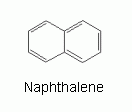
 could do. And the main ingredient? Naphthalene - an ingredient found in moth balls and lighter fluid. Napthalene, also known as Naphtha, is commonly used as a stain cleaner and the main ingredient in Ronsonol Lighter Fluid. If you have ever had a Zippo lighter, you have probably seen the yellow Ronsonol bottle. Naphthalene is also listed as a possible carcinogen.